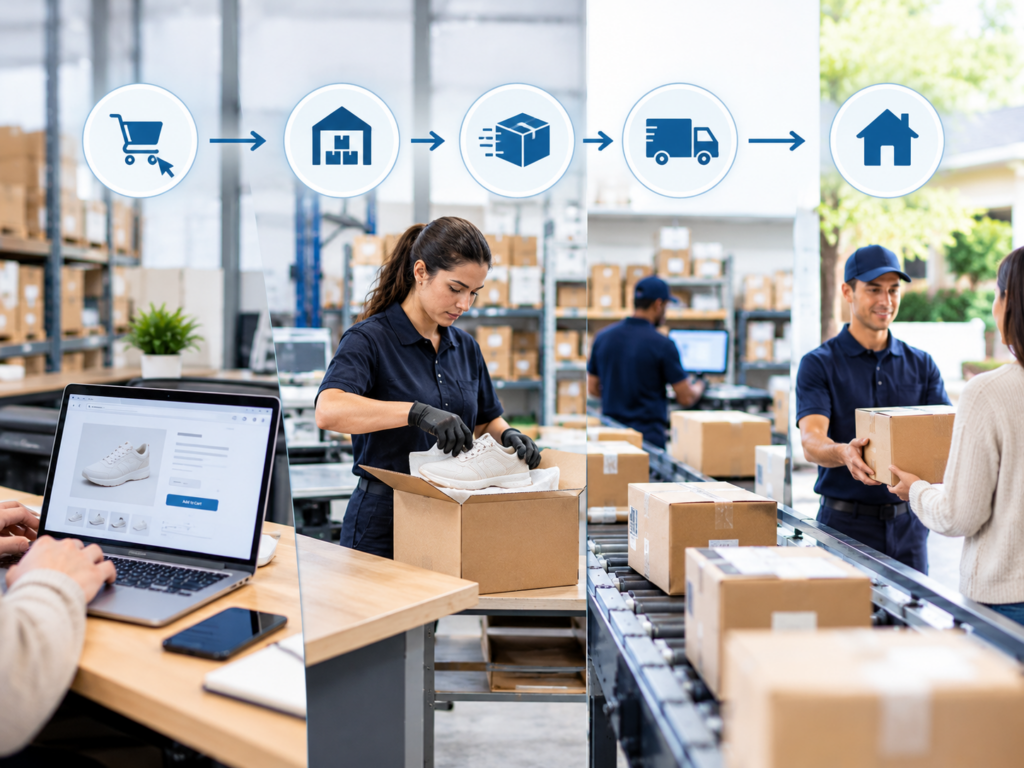
When a customer clicks “Buy Now,” your work is only beginning. The order must be recorded, the right product must be found, the package must be prepared, and the shipment must reach the customer. For growing online stores, managing each step can take time and resources.
The ecommerce fulfillment process covers the tasks that move a product from stored inventory to a customer’s doorstep. These tasks include inventory receiving, order processing, picking, packing, shipping, and sometimes returns.
A third-party logistics provider, or 3PL, can manage some or all of these steps for your business. Instead of running your own warehouse, you work with a fulfillment partner that handles daily order operations based on your agreement.
Proven Prep helps ecommerce brands explore fulfillment needs and find ways to make order management easier. Understanding each stage of the process can help you see where a 3PL adds value and whether outsourcing fits your business.
Step 1: Inventory Receiving and Storage
Before a customer can place an order, your products need to be available for sale. This begins with inventory receiving, when products arrive at a fulfillment facility from your supplier or business.
The warehouse team checks the shipment against the details provided. Depending on the agreed process, this may include checking product quantities, item codes, labels, and visible damage. Any mismatch should be recorded and reported so it can be resolved.
Once the products pass the required checks, the team assigns them to storage locations. A clear storage system helps staff find items quickly when orders arrive. Product details and stock quantities are also entered into the inventory system.
Accurate receiving matters because mistakes at this stage can affect the entire order fulfillment process. If stock counts are wrong, a product may appear available online even when it cannot be shipped.
A 3PL can take on much of this warehouse work, but your business still needs to send accurate product details and shipping information.
Step 2: Inventory Tracking and Stock Updates
After products enter the warehouse, inventory needs to be tracked. Your ecommerce store must show the right stock levels so customers can place orders with confidence.
Many fulfillment providers use warehouse management systems to track product quantities and storage locations. When the system connects with your ecommerce platform, stock information may update as orders are received and fulfilled. The exact features depend on the provider and integration.
Good inventory tracking helps you identify low stock, plan restocking, and reduce the risk of overselling. It can also help you understand which products sell quickly and which items stay in storage for longer.
However, software alone cannot prevent every issue. Regular stock checks, clear product labels, and accurate records are still important. Ask your provider how often inventory is reconciled and how it handles missing, damaged, or misplaced items.
Step 3: Order Processing Begins
When a customer places an order, the details move from your online store into the fulfillment system. This stage is known as order processing.
The order information may include the product, quantity, customer address, shipping method, and any special instructions. The system checks whether the order can be processed and passes it to the warehouse team.
Depending on the setup, the order may also be checked for payment status, stock availability, or other conditions before it moves forward. Once it is ready, the warehouse receives the information needed to prepare the shipment.
Reliable order processing helps keep information consistent between your store and the warehouse. It also reduces the need to enter order details by hand, which can lead to mistakes.
For an ecommerce business handling many orders each day, this automation can save time and help the team manage demand more efficiently.
Step 4: Picking the Right Products
Once an order is ready, the warehouse team begins picking. This means locating each item and collecting the correct quantity from its storage location.
For example, an order may include two shirts in different sizes and a pair of socks. The picker must find all three items and confirm that the selected products match the order.
Warehouses may use pick lists, barcode scanners, or digital tools to guide this task. Some operations pick one order at a time, while others group orders to improve efficiency. The best method depends on the product range, warehouse layout, and daily order volume.
Picking errors can lead to returns, extra shipping costs, and customer complaints. Clear product labels and accurate inventory records help reduce these risks.
When a 3PL manages picking, your business does not need to organize every warehouse task itself. You should still ask about the provider’s quality checks and how it tracks order accuracy.
Step 5: Packing and Preparing the Shipment
After picking, the products move to the packing area. Here, the team checks the items, chooses suitable packaging, and prepares the order for transport.
The right packaging helps protect products during shipping. Fragile items may need added protection, while smaller products may fit into compact mailers or boxes. Your business may also want branded packaging, product inserts, or promotional materials.
These details should be discussed with the fulfillment provider before orders begin. Some packaging options may require extra materials, labor, or fees.
The pick pack ship workflow works best when each stage has clear instructions. Staff need to know which products belong in each order, how to pack them, and which shipping method to use.
A 3PL can provide a repeatable packing process, but you should confirm that its methods match your product needs and brand standards.
Step 6: Shipping and Carrier Handoff
Once an order is packed, it is labeled and prepared for carrier pickup. The shipping label includes the details needed to route the package to the customer’s address.
Depending on the setup, the fulfillment provider may select a carrier based on your shipping rules, service level, package size, or destination. The parcel is then handed over for delivery.
Tracking information is often shared with your ecommerce store so customers can follow their orders. This helps answer common questions about shipment status and gives buyers more visibility after checkout.
Delivery speed depends on factors such as the shipping method, distance, carrier capacity, and weather. A 3PL can help coordinate the process, but it cannot control every part of the carrier’s network.
When comparing order fulfillment services, ask about carrier options, daily shipping cutoffs, tracking updates, and how delayed or lost shipments are handled.
Step 7: Delivery Updates and Customer Support
The fulfillment process does not end when the parcel leaves the warehouse. Customers may need updates, and your team may need to answer questions about delivery dates, tracking, or missing packages.
A connected system can make it easier to share tracking information and keep order records up to date. Depending on your agreement, a 3PL may provide shipment data and help investigate warehouse-related issues.
However, customer communication often remains the responsibility of the ecommerce brand. Decide who will handle delivery questions, damaged shipments, and requests for order changes.
Clear ownership prevents customers from being passed between your business, the warehouse, and the carrier. It also helps your team resolve problems faster.
Step 8: Returns and Inventory Updates
Some customers will return products because of fit, damage, incorrect items, or a change of mind. A clear returns process helps your business handle these cases without creating confusion.
Depending on the service, a 3PL may receive returned items, inspect them, record their condition, and return eligible products to sellable inventory. Items that are damaged or incomplete may need to be held for review.
Your business should set rules for refunds, restocking, product inspection, and damaged goods. These rules help the warehouse team make consistent decisions.
Returns also provide useful information. If the same product is often returned because of sizing or quality concerns, you may need to update its description or review the product itself.
Before signing an agreement, confirm whether returns processing is included in the service and what additional charges may apply.
How a 3PL Can Simplify the Ecommerce Fulfillment Process
Managing every stage in-house can become difficult as order volume grows. Your team must handle storage, inventory updates, picking, packing, shipping, and returns while still running the rest of the business.
A 3PL can bring these tasks together in an established operation. This may reduce the need to hire warehouse staff, rent more space, or manage every shipment yourself. It can also provide systems that help your team monitor inventory and orders.
Still, outsourcing is not an automatic fix. Results depend on the provider’s processes, service terms, technology, and ability to meet your needs. You will also need to share accurate product data, plan stock levels, and review performance.
When evaluating ecommerce fulfillment services, compare total costs, order accuracy, processing times, inventory visibility, shipping options, and support. Ask for a clear breakdown of receiving, storage, picking, packing, shipping, and returns fees.
Proven Prep can be a starting point as you assess your current workflow and explore fulfillment options that support your business goals.
Final Thoughts
The ecommerce fulfillment process connects every stage between a customer’s purchase and the arrival of their order. Each step matters, from accurate inventory receiving to careful packing, reliable shipping, and well-managed returns.
As your business grows, handling every task in-house may become harder and more costly. A 3PL can help simplify daily operations by managing agreed parts of fulfillment through its warehouse team and systems.
Review your current workflow, identify the tasks that cause the most problems, and compare your options carefully. With a suitable fulfillment partner and clear processes, your business can spend less time managing orders and more time serving customers and growing with Proven Prep.
Frequently Asked Questions
1. What are the main steps in the ecommerce fulfillment process?
The main steps are inventory receiving, storage and tracking, order processing, picking, packing, shipping, delivery updates, and returns handling. The exact workflow varies by business and fulfillment provider.
2. How does a 3PL receive and store inventory?
A 3PL receives products, checks them against shipment details, records quantities, and assigns storage locations. The process may also include checking labels and visible damage before stock is made available for orders.
3. What does pick, pack, and ship mean?
Pick, pack, and ship describes the steps used to prepare an order. Staff pick the correct products, pack them safely, and arrange shipment through a carrier.
4. Can a 3PL connect with my ecommerce store?
Many providers support integrations with common ecommerce platforms and order systems. Check that the provider supports your platform and confirm how orders, stock levels, and tracking information will sync.
5. Does a 3PL handle returns?
Some 3PLs offer returns processing, including receiving and inspecting returned items. Services and fees vary, so confirm how returned products are recorded, restocked, or held for review.
6. How can I improve my order fulfillment process?
Keep inventory records accurate, use clear product labels, set consistent packing rules, and track order errors and shipping delays. If order volume becomes hard to manage, compare in-house costs with third-party fulfillment options.
Proven Prep Center · Portland, Oregon
Ready to hand off your fulfillment?
Tell us what you sell, where you sell it and roughly how many orders you ship. We’ll put together a plan and a quote for your operation. No order minimums for DTC brands.
Or call or text 503-987-8977