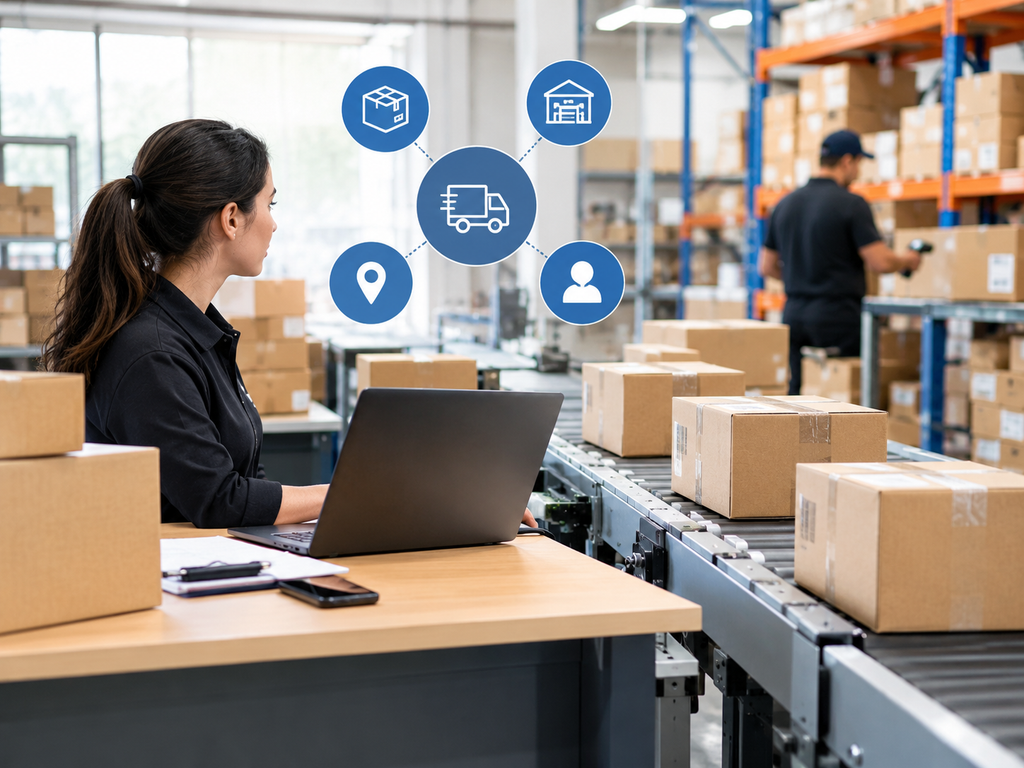
If you run an online store, you know that getting an order is only the first step. Every purchase must be picked, packed, shipped, and tracked. As sales grow, managing these tasks can take time away from marketing, product development, and customer service. This is where understanding what is a 3PL becomes useful.
A third-party logistics (3PL) provider handles some or all of a business’s storage, order processing, packing, and shipping. Instead of managing every order from your own space, you work with a logistics partner that has the staff, systems, and processes to support fulfillment.
For growing brands, 3PL services can help manage rising order volumes without the need to build a larger in-house operation. However, outsourcing is not the right move for every business. The best time to make the switch depends on your sales, storage needs, order volume, and plans for growth.
Proven Prep helps ecommerce brands understand their fulfillment needs and explore solutions that fit their operations. Below are seven signs that your business may be ready to outsource fulfillment.
How Does Third-Party Logistics Work?
A third-party logistics provider manages agreed parts of your supply chain. The exact services vary by provider, but the process often begins when your inventory arrives at a fulfillment facility.
The provider receives and stores your products, tracks available stock, and connects its order system with your ecommerce platform. When a customer places an order, the provider picks the correct items, packs them, and prepares the shipment. Depending on the service, it may also handle returns, inventory reporting, and other warehouse tasks.
This arrangement allows your business to focus on sales and customer experience while a specialist manages day-to-day fulfillment.
What Do 3PL Services Include?
Common services may include:
- Inventory storage: Keeping products organized and ready for orders.
- Order fulfillment: Picking, packing, and preparing customer orders for shipment.
- Shipping coordination: Working with carriers to send orders to customers.
- Inventory tracking: Monitoring stock levels and helping identify when products need replenishment.
- Returns processing: Receiving returned items and updating inventory based on agreed procedures.
- Custom packing: Using approved packaging, inserts, or branded materials when available.
Not every provider offers every service. Before choosing a fulfillment partner, confirm which tasks are included, what they cost, and how they fit your business needs.
7 Signs Your Ecommerce Brand Is Ready to Outsource Fulfillment
1. Packing Orders Takes Time Away From Growing Your Business
In the early days of an online store, packing orders yourself can be practical. You may have a manageable number of sales and enough room to store your products. As the business grows, however, fulfillment can become a daily responsibility that takes hours to complete.
If you spend much of your day printing shipping labels, finding products, packing boxes, and arranging pickups, you may have less time for activities that increase revenue.
Outsourced fulfillment can shift these routine tasks to a dedicated team. This gives you more time to improve product listings, run marketing campaigns, support customers, and plan new product launches.
2. Your Order Volume Is Growing Beyond Your Current Capacity
Growth is good news, but it can put pressure on your existing processes. A packing system that works for 10 orders a day may struggle when order volume rises to 100 or more. The right capacity depends on your products, order complexity, staff, and available space.
When orders increase, you may need more workers, packing stations, storage racks, and shipping supplies. Expanding your own operation can become costly and time-consuming.
A 3PL can provide access to an established fulfillment setup. Before making a decision, ask how the provider handles busy periods, sudden sales spikes, and seasonal demand.
3. Inventory Storage Is Becoming a Problem
As your product range expands, inventory can quickly take over spare rooms, offices, garages, or rented storage units. Poorly organized stock can also lead to misplaced items, inaccurate counts, and slower order processing.
Ecommerce logistics involves more than moving parcels. It also requires clear inventory records, efficient storage, and reliable processes for receiving new stock.
A fulfillment facility may offer organized storage and inventory tracking systems that support a larger product range. This can be especially helpful if you sell several sizes, colors, product variations, or bundles.
Before outsourcing, review how inventory is recorded, how often counts are checked, and how you can access stock reports.
4. Shipping Delays and Order Errors Are Affecting Customers
Customers expect their orders to arrive within the promised delivery window. They also expect the right product to arrive in good condition. When fulfillment processes become overloaded, mistakes and delays can damage trust.
For example, a team rushing to pack a large number of orders may select the wrong product or miss an item. Delayed carrier handoffs can also lead to late deliveries.
Professional 3PL services may help improve consistency through established picking, packing, and shipping procedures. Still, results depend on the provider’s processes, technology, carrier options, and service standards.
When comparing providers, ask about order accuracy, processing cutoffs, tracking updates, and how fulfillment issues are resolved.
5. You Want to Expand Into New Markets
Selling to customers in new states or regions can create new fulfillment challenges. Longer shipping distances, changing delivery costs, and higher order volumes may affect your margins and customer experience.
A suitable 3PL may help you manage this growth without setting up your own warehouse in every market. Some providers offer multiple fulfillment locations or work with shipping partners to support wider delivery coverage.
However, a provider’s location alone does not guarantee faster or cheaper delivery. Your product dimensions, shipping zones, carrier rates, and order patterns all matter.
Review where your customers live and compare shipping costs before choosing a location or service plan.
6. Your Fulfillment Costs Are Hard to Predict
Managing fulfillment in-house can involve many separate expenses. These may include warehouse rent, labor, packaging, shipping supplies, software, equipment, and the time spent overseeing daily operations.
Some costs increase gradually, while others rise sharply when you need more space or extra staff. This can make it difficult to estimate the true cost of fulfilling each order.
A third-party logistics provider usually charges according to its pricing structure. Fees may include receiving, storage, picking, packing, shipping, and special handling. Some providers may also charge for account setup, returns, or long-term storage.
Compare the full cost of outsourcing with your current operating costs. Do not compare only the quoted fulfillment fee with your shipping expense.
7. You Need a Fulfillment System That Can Scale
Your current setup may work well today but become difficult to manage as your business adds products, sales channels, or promotions. Manual spreadsheets and separate systems can make it harder to keep inventory and order information aligned.
A fulfillment partner may provide tools that connect with your ecommerce platform and share order and inventory updates. The level of integration depends on the provider and the software you use.
Before signing an agreement, check whether the provider supports your sales channels, product types, packaging requirements, and expected growth. Also ask how onboarding works and who will help resolve technical issues.
How to Choose the Right Fulfillment Partner
Recognizing these signs is the first step. Next, compare providers based on your actual business needs rather than choosing the lowest advertised rate.
Start by reviewing your average daily orders, monthly sales patterns, product dimensions, inventory levels, and shipping destinations. This information helps you explain your needs and request useful quotes.
Ask each provider about its receiving process, inventory tracking, order cutoffs, shipping options, returns handling, and support. Confirm whether its systems integrate with your ecommerce platform and whether it can handle your packaging or labeling requirements.
Pricing deserves close attention. Request a breakdown of receiving, storage, picking, packing, shipping, and additional fees. Ask how charges change during busy periods and whether minimum monthly fees apply.
You should also understand the service agreement. Check its terms for inventory access, order processing, damaged goods, reporting, and ending the relationship. A clear agreement can prevent confusion as your business grows.
For brands exploring 3PL fulfillment services, Proven Prep can be a starting point for evaluating fulfillment needs and finding a setup that supports future growth. The right choice should make operations easier to manage while giving you a clear view of costs and service expectations.
Is Outsourced Fulfillment Right for Every Ecommerce Business?
Not necessarily. If you ship only a few orders each week, have plenty of storage space, and can handle packing without disrupting other work, keeping fulfillment in-house may still make sense.
Outsourcing also requires planning. You will need to send inventory to the provider, learn its systems, and make sure product information and order data are accurate. You may also have less direct control over the physical packing process.
The decision should come down to the value of your time, the reliability of your current process, your growth plans, and the total cost of each option.
If you are spending more time managing boxes than building your brand, it may be time to compare ecommerce fulfillment services and assess whether an external team can help.
Final Thoughts
Understanding what is a 3PL can help you decide whether your business has reached the point where fulfillment needs a different approach. If packing orders takes too much time, inventory is difficult to manage, or shipping problems affect customers, outsourcing may be worth exploring.
The goal is not simply to move fulfillment outside your business. It is to build a process that supports reliable service, clearer costs, and sustainable growth.
Review your current workload, calculate your true fulfillment costs, and compare providers carefully. With the right fulfillment partner, your team can spend less time managing daily shipping tasks and more time building a stronger ecommerce brand with Proven Prep.
Frequently Asked Questions
1. What is a 3PL in ecommerce?
A 3PL, or third-party logistics provider, is a company that manages fulfillment tasks for an ecommerce business. Services may include storing inventory, picking and packing orders, shipping products, and processing returns.
2. What is the difference between a 3PL and a shipping carrier?
A shipping carrier transports parcels from one location to another. A 3PL can manage a wider range of tasks, including inventory storage, order picking, packing, and coordinating shipments with carriers.
3. When should an ecommerce business outsource fulfillment?
Consider outsourcing when order volume becomes difficult to manage, storage space runs short, shipping errors increase, or fulfillment takes time away from growth. Compare the total costs and service options before making the switch.
4. How much do 3PL services cost?
Costs depend on order volume, product size, storage needs, packaging, shipping destinations, and the provider’s pricing model. Request a detailed quote that includes all recurring and additional fees.
5. Can a 3PL integrate with my ecommerce store?
Many providers support integrations with popular ecommerce platforms and order management systems. Confirm compatibility with your store, inventory tools, and sales channels before signing an agreement.
6. Does a 3PL handle returns?
Some providers offer returns processing, but the exact service varies. Ask how returned products are inspected, recorded, restocked, or set aside when they cannot be resold.