Choosing a fulfillment partner is a major decision for any ecommerce company, but apparel brands face a different level of operational detail. A warehouse may be able to ship ordinary consumer products and still struggle with size and color variants, seasonal collections, launch-day spikes, branded presentation, exchanges, and high return volume.
The right apparel 3PL should do more than store boxes and print labels. It should understand how your catalog is organized, how your customers expect orders to arrive, what happens during a product drop, and how returned garments move back into inventory.
This guide explains what clothing brands should evaluate before outsourcing fulfillment, the questions to ask prospective providers, the warning signs to watch for, and the information to prepare before onboarding.
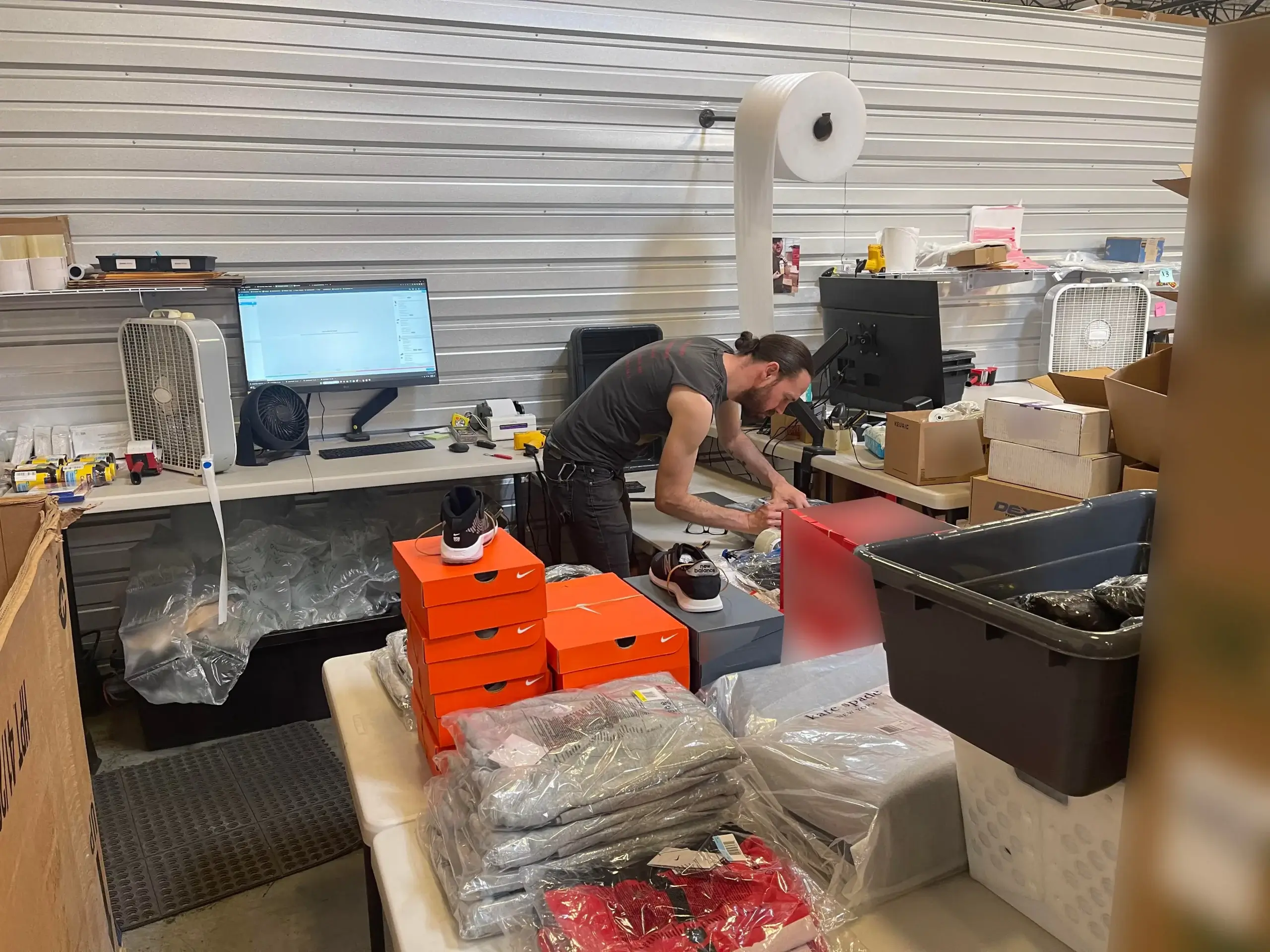
Why Apparel Fulfillment Is Operationally Different
A single apparel style can create a large family of related SKUs. A hoodie offered in five colors and eight sizes creates 40 variants before adding seasonal editions, bundles, or wholesale packs.
That complexity affects nearly every warehouse process:
- Receiving
- Location assignment
- Barcode scanning
- Pick accuracy
- Packing
- Inventory counts
- Returns
- Replenishment
- Reporting
- Wholesale allocation
Apparel brands also tend to operate around releases, promotions, collections, and restocks. Daily order volume may be manageable for weeks and then increase sharply after a drop announcement.
Packaging matters as well. Customers may expect a carefully folded garment, a clean branded mailer, tissue, stickers, inserts, or campaign-specific materials. A generic packing workflow can save a few seconds but weaken the experience the brand worked hard to create.
For those reasons, the best 3PL for a clothing brand is not always the largest warehouse or the provider with the lowest advertised pick fee. It is the provider that can consistently execute the complete operating standard.
1. Start With SKU and Variant Control
Ask the 3PL how it organizes products that share the same style but differ by size, color, material, season, or edition.
A good answer should involve more than “we put everything on a shelf.” Look for:
- Unique SKU and barcode requirements
- Scanning during receiving and picking
- Separate pickable and backstock locations
- Clear product naming
- Processes for mixed cartons
- Exception handling for missing or incorrect labels
- Inventory adjustments with documentation
- Cycle-count or inventory-review procedures
- Rules for discontinued or held inventory
The provider should be willing to map your catalog before inventory arrives. If your source data is inconsistent, the warehouse should identify the problem during onboarding instead of discovering it in the middle of a launch.
Questions to ask
- Does every sellable variant need a unique SKU?
- What happens if two sizes use similar packaging?
- Can your system support style-color-size reporting?
- How are mixed-SKU cartons received?
- How do you separate sellable, hold, damaged, and return inventory?
- Can we view inventory by location and status?
- How are discrepancies reported?
2. Evaluate Product-Drop Capacity, Not Just Average Volume
Average monthly order volume does not describe an apparel drop.
A brand may ship 1,500 orders per month but receive 900 of them in the first 48 hours after a release. A fulfillment provider that staffs only for the monthly average can fall behind when the brand needs it most.
Ask how the 3PL plans for:
- Product launches
- Flash sales
- Influencer campaigns
- Restocks
- Holiday peaks
- Preorders
- Limited-edition releases
- Wholesale deadlines
The conversation should cover inventory arrival, launch date, expected order curve, units per order, packaging complexity, carrier pickup, weekend timing, staffing, and what happens if actual demand exceeds the forecast.
No responsible provider should guarantee an unlimited launch-day capacity without understanding the scope. A better sign is a team that requests forecasts, test orders, packaging samples, and an agreed cutoff for inventory and materials.
Questions to ask
- How much notice do you need before a drop?
- What information should we provide about expected volume?
- Can kits or bundles be assembled before launch?
- What happens if packaging arrives late?
- How are priority orders handled?
- How do you communicate backlog or exceptions?
- Are launch projects billed differently from normal fulfillment?
3. Review Receiving and Quality-Control Procedures
Many apparel fulfillment problems begin before the first customer order.
Inventory may arrive with:
- Mixed sizes or colors
- Incorrect case quantities
- Missing barcodes
- Damaged poly bags
- Inconsistent labels
- Open cartons
- Product substitutions
- Factory overages or shortages
- Incomplete sets
Ask the provider exactly what standard receiving includes. A basic receiving service may count cartons without opening them. A detailed receiving service may count units, scan barcodes, inspect visible condition, separate exceptions, and report discrepancies.
Neither approach is automatically right or wrong. The important point is that the scope, pricing, and expected evidence are clear.
Questions to ask
- Do you count cartons, cases, or individual units?
- Is barcode scanning included?
- What visible-condition checks are performed?
- Can you photograph exceptions?
- How are shortages and overages reported?
- What happens when a barcode is missing?
- Can you rebag or relabel units?
- How soon must discrepancies be reported to the supplier?
4. Test the Branded Packing Experience
For apparel brands, the package is part of the marketing.
Before choosing a 3PL, provide a physical sample or written standard showing how an order should look. Include:
- Folding method
- Poly bag or product protection
- Tissue
- Stickers
- Thank-you cards
- Promotional inserts
- Branded mailer or box
- Gift notes
- Multi-item presentation
- Packing-slip requirements
- Rules for international or wholesale orders
Ask the provider to create sample packs before launch. Review the presentation, material usage, labor assumptions, shipping weight, and package dimensions.
A beautiful package that doubles shipping cost may not be sustainable. A strong 3PL should help the brand balance presentation, protection, labor, and carrier economics.
Questions to ask
- Can you follow different packaging rules by order type?
- Can materials be tracked as inventory?
- What happens when an insert runs out?
- Can we update campaign inserts by date or SKU?
- Are gift messages supported?
- How are packaging changes approved?
- Can you provide a sample pack before go-live?
5. Confirm Kitting, Bundling, and Set Capabilities
Apparel brands frequently sell matching sets, multi-packs, accessory bundles, gifts with purchase, influencer kits, or limited-edition boxes.
Ask whether the 3PL can build these projects before orders arrive or assemble them on demand. Pre-built kits may improve picking speed, while on-demand assembly may preserve inventory flexibility. The right approach depends on sales velocity, component availability, and how the bundle is represented in the inventory system.
A formal kitting process should use:
- A bill of materials
- Component SKUs
- Finished-kit SKU
- Approved packaging
- Sample approval
- Quantity targets
- Quality checks
- Exception rules
- Inventory adjustments
- Completion reporting
Read more about kitting and assembly services.
6. Examine Returns and Exchange Workflows
Apparel returns are not a side issue. They can determine whether the inventory record remains trustworthy.
Ask what happens after a returned package arrives. A complete workflow may include:
- Identify the order and customer return
- Confirm the returned SKU
- Inspect visible condition
- Check tags, packaging, and components
- Assign an approved condition category
- Restock, rebag, relabel, hold, or quarantine
- Record the inventory decision
- Report exceptions
The brand—not the warehouse—should define the grading standard. Terms like “sellable” or “worn” can be subjective unless the criteria are documented.
The 3PL should also explain what it can and cannot do. Visible-condition review is different from cleaning, laundering, odor remediation, authenticity inspection, or product-safety testing.
See returns and reverse logistics services for related workflows.
Questions to ask
- How are returns connected to the original order?
- Can you follow our grading matrix?
- Do you rebag or relabel restockable units?
- How is damaged inventory separated?
- Can you photograph high-value exceptions?
- What happens when the wrong item is returned?
- How quickly are approved units returned to available inventory?
- How are disposal or donation decisions authorized?
7. Check Inventory Visibility and Integrations
The warehouse management system should give the brand enough visibility to make decisions without requesting a manual count every day.
Ask to see:
- Available inventory
- Allocated inventory
- Backstock
- Damaged or hold inventory
- Returns status
- Order status
- Tracking
- Receiving progress
- Inventory adjustments
- Bundle components
- Channel allocation
Also confirm how orders and inventory connect with the platforms you use. Common apparel channels include Shopify, WooCommerce, TikTok Shop, Amazon, Walmart Marketplace, Faire, wholesale portals, and manually submitted B2B orders.
Integration does not eliminate the need for testing. Before launch, complete test orders for:
- A single item
- Multiple sizes or colors
- A multi-item order
- A bundle
- A promotional insert
- An expedited method
- A gift message
- A return or cancellation workflow
Learn more about Shopify fulfillment and Oregon ecommerce fulfillment.
8. Ask About Wholesale, Retail, and Omnichannel Growth
A DTC brand may later add boutiques, major retailers, distributors, pop-ups, marketplaces, or corporate orders.
Changing fulfillment providers every time a new channel is added is disruptive. Ask whether the 3PL can support:
- DTC parcels
- Wholesale cartons
- Case packs
- Retailer labeling
- Packing lists
- Palletized shipments
- LTL freight
- Sample shipments
- Pop-up inventory
- Marketplace prep
- Returns from multiple channels
A provider with both consumer and B2B capabilities can help the brand use one inventory pool while applying different rules to each order type.
Visit retail distribution services for more information.
9. Understand the Full Rate Card
The lowest pick fee does not always produce the lowest total fulfillment cost.
Request pricing for:
- Account setup
- Integrations
- Receiving
- Unit counts
- Pallet, shelf, bin, or floor storage
- First item and additional items
- Packaging materials
- Branded inserts
- Kitting
- Labeling
- Returns
- Photos or inspection
- Special projects
- Monthly minimums
- Peak surcharges
- Freight coordination
- Disposal
- Account management
- Postage or carrier charges
Ask which services are included, which are estimated, and which are billed hourly.
A clear rate card should match the actual workflow. Review 3PL pricing and compare your internal costs for space, labor, equipment, systems, management time, and error handling.
10. Evaluate Communication and Escalation
Even a well-designed workflow will encounter exceptions.
The important question is how quickly the warehouse identifies the issue and how clearly it communicates.
Ask:
- Who is our day-to-day contact?
- Where are questions submitted?
- What is the expected response time?
- How are urgent launch issues escalated?
- How are receiving discrepancies reported?
- Who approves special projects?
- How are SOP changes documented?
- How often are account reviews held?
- What reports are available?
- What happens after a repeated error?
The provider should be willing to define communication channels and ownership before go-live.
11. Review Onboarding Before Signing
A rushed onboarding creates long-term problems.
A strong apparel onboarding plan should cover:
- Legal and billing information
- Product catalog
- SKU and barcode map
- Sales channels
- Shipping methods
- Packaging materials
- Branded packing SOP
- Bundle definitions
- Returns grading
- Wholesale requirements
- Forecasts and peak dates
- Inventory transfer
- Test orders
- Go-live criteria
- Exception contacts
- Reporting expectations
Use our 3PL onboarding checklist to organize the transition.
Warning Signs When Evaluating an Apparel 3PL
Be cautious if a provider:
- Will not explain its receiving scope
- Does not require unique SKUs or scannable barcodes
- Cannot separate sellable and hold inventory
- Avoids discussing returns
- Promises unlimited same-day shipping without forecasts
- Cannot show how bundles affect inventory
- Treats packaging instructions as informal
- Has no launch-planning process
- Cannot support both DTC and wholesale
- Gives an incomplete rate card
- Does not test integrations or orders
- Changes SOPs without documentation
- Claims formal marketplace affiliation without evidence
Apparel 3PL Evaluation Checklist
Before making a decision, confirm:
- The provider understands size, color, style, and seasonal variants.
- Every sellable unit can be tied to a clear SKU and barcode.
- Receiving scope and discrepancy reporting are documented.
- Drop-day forecasts and capacity planning are required.
- Branded packaging has been sample-tested.
- Kitting and bundle inventory are tracked correctly.
- Returns grading and restock rules are written.
- DTC, marketplace, wholesale, and retail workflows are supported where needed.
- Inventory status is visible.
- Pricing includes receiving, storage, orders, returns, packaging, and projects.
- Communication and escalation contacts are assigned.
- Test orders are completed before launch.
- The contract and service scope match the operating plan.
Apparel 3PL FAQs
What makes an apparel 3PL different from a general fulfillment provider?
An apparel 3PL should be prepared to manage size and color variants, product drops, branded presentation, bundles, returns, exchanges, and wholesale or retail orders in addition to standard storage and shipping.
How much order volume is needed to use an apparel 3PL?
There is no universal threshold. Fit depends on order volume, SKU count, storage, growth, labor requirements, packaging complexity, returns, and the cost of continuing to fulfill internally.
Can a 3PL handle limited clothing drops?
Yes, but the brand should provide accurate forecasts, inventory deadlines, packaging materials, and launch requirements. Capacity and timelines should be agreed before the drop.
Should apparel returns be restocked automatically?
Not without a documented standard. The brand should define tag, packaging, visible-condition, contamination, and component requirements before a unit is returned to available inventory.
Can the same 3PL handle DTC and wholesale clothing orders?
Many apparel 3PLs support both, but the brand should confirm retailer routing, carton, label, documentation, freight, and inventory-allocation capabilities.
What should an apparel brand send before onboarding?
Provide the catalog, SKU map, barcodes, channel list, packaging instructions, bundle definitions, return rules, forecasts, shipping methods, wholesale requirements, and sample orders.
Choose a Fulfillment Partner That Protects the Brand Experience
The best apparel 3PL is not simply the warehouse closest to your office or the company with the lowest advertised rate. It is the partner that can understand your catalog, execute your packaging standard, prepare for releases, process returns consistently, and support the channels you plan to add next.
Proven Prep provides apparel fulfillment services for DTC clothing brands, product drops, kitting, returns, and retail distribution from our Portland, Oregon warehouse.